Let me tell you about a horse named Copper.
Copper belonged to a woman named Kate, and Copper had beautiful feet. Rock solid. Her farrier used to pick one up, look at it for about two seconds, and say something like "well, these are easy money" before moving on to the next horse.
Then one September, Kate noticed a chip on the outside of his left front. Small thing. Barely worth mentioning.
Two weeks later there were three more chips, he'd pulled a shoe out in the field, and her farrier was frowning in a way he hadn't frowned before.
Kate hadn't changed a thing. Same paddock. Same feed. Same routine she'd been running for four years.
What changed was the weather.
And here's why that matters to you: what happened to Copper happens to thousands of horses every year, in the exact same three or four week window, for reasons almost nobody bothers to explain properly.
So let's explain it properly.
01
Your Horse's Hoof Is Basically a Wooden Door
Stick with me on this one, because once you see it you can't unsee it.
You know how a wooden door sticks in summer? Humidity gets into the wood, the wood swells up, and suddenly the door won't shut properly. Then winter comes, the air dries out, the wood shrinks back, and now there's a gap you could post a letter through.
Do that to a door for enough years and the joints work loose. The glue gives up. Bits start splitting off.
That is almost exactly what happens to a hoof.
A hoof is made of thousands of tiny straw-like tubes running down through it, all held together by a sort of natural glue. Soak it and it swells. Dry it out and it shrinks back. And when that happens over and over, the glue holding it together starts to give up.
This isn't a theory somebody made up. Veterinarians describe the mechanism the same way: moisture expands a hoof wall, and when it dries out it contracts again. Do that repeatedly and hooves get weaker and far more likely to crack and bruise.
Put another way, the hoof expands with water and shrinks when it dries, and that's when you get all the wall cracks. What you actually want is a nice, even level of moisture in the feet.
An even level of moisture. That's the whole goal. Not wet feet. Not dry feet. Feet that stay somewhere in the middle.
So why is the season change worse than winter?
Fair question, and this is where most people have it backwards.
A horse standing in wet fields all winter has soft feet. That's a problem, but it's a steady problem. The hoof settles into being soft and more or less stays there.
A horse going through a season change has feet that soak up dew and wet grass overnight, dry out and tighten through a warm afternoon, then soak up again by morning. Swell, shrink, swell, shrink. Every day. For weeks on end.
That's the door being slammed open and shut a hundred times instead of just sitting there being a bit stiff.
Why Kate's Horse Fell Apart in a Fortnight
Copper's feet weren't weak. They'd been excellent for four years. But four years of good feet doesn't protect a hoof from three weeks of swelling and shrinking every single day. Nothing about Kate's management was wrong. She just didn't know that window existed, so she didn't do anything different during it.
There's one more thing the wet half of that cycle does, and it sets up everything in the next section. A hoof that's soaked up a lot of water isn't just softer. It's more porous. Like a sponge instead of a brick.
And things can get into a sponge that could never get into a brick.
02
Meet the Bacteria That's Already in Your Barn
Here's something that surprises most people: thrush isn't something your horse catches.
The bacteria behind it, a proper mouthful called Fusobacterium necrophorum, is already there. It lives in soil. It lives in manure. It's in basically every barn on earth, including the immaculate one down the road with the matching buckets and the swept aisle.
It isn't waiting to arrive. It's waiting for an opportunity.
The one weakness it has
This bacteria can't handle oxygen. At all. Expose it to air and it dies.
Which tells you exactly where it hides. It sets up shop in the grooves running either side of the frog and the one down the middle, because those grooves are the one place on a hoof where air genuinely struggles to reach.
Now picture a hoof during a season change. The frog has gone soft from all that moisture. The grooves are packed solid with wet mud and bedding and manure. That packing works like a lid. It seals the air out.
Dark. Wet. No oxygen. You've accidentally built it a perfect little house.
The Good News Hiding in That Fact
Because this bacteria dies in air, every bit of muck you dig out of those grooves is actively killing it. Regular cleaning is one of the most important parts of both prevention and treatment... That one fact should completely change how you feel about the ninety seconds you spend on each foot.
Some horses are set up for this more than others
This isn't really about how careful the owner is. Some feet are just built in a way that gives the bacteria a better hiding place.
-
Deep, narrow grooves. A narrow groove packs tighter and is much harder to clean out. More muck, less air.
-
Contracted heels. When the heels squeeze close together, the middle groove turns into more of a slit than a valley. Almost no air gets down there at all.
-
A sunken frog. If the frog sits lower than the sole around it, it works like a little cup and collects everything that comes its way.
-
A horse that doesn't move much. Movement flexes the hoof, pushes muck out, and pumps blood through the foot. A horse standing still all day gets none of that.
-
Wet bedding. The only one on this list you can completely control, and the one that turns a maybe into a definitely.
03
Seven Signs You'll Probably Walk Straight Past
Most people can spot thrush when it's obvious. Black goo, a smell that makes you turn your head away, the whole show.
By then it's been in there for weeks, quietly eating tissue.
These are the signs that turn up first. None of them are dramatic. All of them are findable in the time you already spend picking out feet.
01
The frog feels squishy instead of firm
Press your thumb into it. A healthy frog feels like a firm rubber eraser and springs back at you. If it's soft, spongy, or gives way too easily, the tissue has started breaking down. This is usually the very first thing to change, and it happens well before you can smell anything.
02
The groove down the middle is deeper than it used to be
Run your hoof pick down the cleft between the heel bulbs. Does it go in further than it did a month ago? Has it gone from a valley to more of a slit? That's tissue disappearing from the inside out. If you can sink a hoof pick down in there, that's not just how your horse is built.
03
A faint whiff you'd blame on something else
Not the unmistakable rotten smell. Just something slightly off that you notice for half a second and put down to the bedding, or the mud, or the barn in general. Learn what your horse's clean feet smell like. Once you know that baseline, anything different jumps straight out at you.
04
Grey or black gunk that wipes off
Early on, the muck is sitting on top of the tissue rather than in it. Wipe the groove with a rag. If the colour comes away, you've caught it early and you're in good shape. If it's stained into the tissue and won't shift, you're further along than it looks.
05
A tiny flinch when you pick that foot
Not limping. Limping usually only shows up once the infection has worked its way into the sensitive tissue underneath. Just a shift of weight, a lifted head, a foot that pulls away from you a bit. A healthy frog doesn't mind a hoof pick. A sore one does.
06
The grooves pack up faster than they used to
Easy to blame on the mud, this one. But as those grooves get deeper and the tissue softens, they hold more and grip it tighter. If a foot that used to clean out in fifteen seconds now takes a full minute of digging, the shape of that groove has changed.
07
A damp frog on a dry day
It hasn't rained in three days and the frog still feels wet. That moisture isn't coming from outside. It's coming from the tissue itself, and it's one of the more reliable early tells there is.
Before You Panic About the Peeling Bit
Frogs shed a layer twice a year. It's completely normal and it looks alarming the first time you see it. The thing to check is what's underneath. Firm, evenly coloured and no smell means it's just a normal shed. Soft, dark in the grooves, or sore means you're dealing with something else.
04
Why the Thrush Keeps Coming Back
Let's go back to Kate for a minute.
What Happened Next
By early October, Copper had thrush in both hinds. Kate did what most of us were taught to do. She bought the purple stuff, painted it into the grooves twice a week, and stained her hands and half her tack room purple in the process.
And it worked. Two weeks later the smell had gone and she got on with her life.
Then in November it was back. Worse this time. So she treated harder, more often, really got in there with it.
By February she'd treated Copper's feet four separate times and could not work out why a horse with genuinely good feet had suddenly developed a chronic problem.
Kate wasn't doing anything wrong by the standards she'd been handed. But there's something about harsh thrush treatments that nobody puts on the label.
They don't only kill the bad stuff
Bleach is a popular home remedy, and vets are pretty blunt about it. It kills the microorganisms, yes, but it burns the tissue too, and you can end up doing more damage to the tissue than the infection was. Farriers put it even more plainly: bleach kills good and bad alike, will likely make the horse sore, and is simply too strong for the job.
Copper sulfate has its own problems. Both the Environmental Protection Agency and the National Pesticide Information Center flag health concerns with it. And industry specialists warn that repeated use can be toxic to living tissue by causing inflammation, and can stunt the growth of the young tissue trying to grow in.
Read that last bit twice. The treatment can slow down the new tissue you're counting on to replace what the infection destroyed.
Harsh treatments clear the bacteria, but they weaken the healthy tissue around it too. And weaker tissue is easier for bacteria to get into next time.
That's the loop Kate got stuck in. Treat hard. Infection clears. Healthy tissue is now slightly weaker than it was. Next opportunity comes along and gets in easier than the last one. Treat harder. Round and round.
And then there's the drying problem
Most harsh thrush treatments work partly by drying the hoof out. Over-drying is so common when treating thrush that it's basically an expected side effect.
Now line that up with everything in Section One.
A hoof going through a season change is already being battered by swings between soaked and bone dry. Painting a strong drying agent onto it doesn't calm that swing down. It makes the dry half worse.
So the thrush treatment feeds the cracking. And the cracking opens up new ways in for infection.
Two problems, holding hands.
The way out of that loop is to stop thinking about the hoof as something to disinfect and start thinking about it as tissue you keep in good shape.
A natural oil-based treatment does three jobs at once, and the combination is really the whole point.
It kills the bacteria. It conditions the tissue instead of burning it. And it evens out the swing between wet and dry rather than making it worse.
| What it does |
Harsh chemical |
Natural oil |
| To the bacteria |
Burns it out on contact |
Makes the hoof somewhere it can't set up |
| To healthy tissue |
Can burn it and weaken it |
Conditions and supports it |
| To new growth |
Can slow it right down |
Feeds it from the coronary band down |
| To moisture |
Dries the hoof out, often too much |
Evens out the wet and dry swing |
| Daily use |
No. More often means more damage |
Yes. Daily is how it's meant to be used |
| Hands and clothes |
Stains everything purple |
Stains nothing at all |
| Your horse's opinion |
Often stings on sore tissue |
No sting, so they stand still for it |
That last row is worth more than it looks. A treatment that stings is a treatment your horse learns to fight you on. Which means the daily routine turns into a daily argument, and daily quietly becomes twice a week, and twice a week becomes whenever you remember.
A treatment your horse stands calmly for is a treatment that actually gets used.
What's in it and what each bit is for
-
Natural Essential Oil Blend. This is the business end of the formula, and it's what does the actual work on the bacteria and fungus causing the thrush.
-
Coconut oil. Light enough to soak in properly and carries the essential oils down into the hoof instead of leaving them sitting on top.
-
Sesame oil. Absorbs well and brings some antibacterial properties of its own along for the ride.
-
Castor oil. The thick one. It sticks around in the grooves, which is exactly where you need it to stay put.
-
Jojoba oil. Remarkably close to the natural oils skin already makes, so it soaks in beautifully around the coronary band where new hoof gets built.
-
Vegetable glycerine. Holds moisture in the hoof rather than pulling it out, which is the exact opposite of what a drying agent does.
06
The Ninety Second Routine
This is short. What makes it work is that it happens every day rather than when you get around to it.
-
Actually dig the grooves out. Not a quick scrape across the bottom. Get the pick down the full depth of the middle groove and both side grooves. Remember, you're not tidying up here. You're letting air in to kill the bacteria.
-
Use the brush end. Five seconds a foot, and it clears the fine stuff the pick leaves behind. That fine stuff is what keeps the air out.
-
Have a sniff. While the foot's still in your hand. You'll catch a change days before you can see one.
-
Thumb the frog. Firm and rubbery is what you want. Squishy is your signal to act. Three seconds.
-
Oil the whole thing. Wall, coronary band, sole, and worked down into the grooves. The coronary band matters because that's the factory where new hoof gets made. The grooves matter because that's where thrush lives.
-
Give it a minute before turnout. Just long enough to soak in rather than getting wiped straight off in the mud.
How Often, Really
Every single day, all year round. Not just through the season change, and not every other day when things look fine. Daily is the whole point, because you're not fixing a problem, you're keeping the hoof steady so the problem never gets a foothold. And here's the bit people get wrong about why: you're not adding moisture to the hoof. You're smoothing out how sharply it swings between soaked and dry. That swing is the thing doing the damage, and it doesn't take days off.
07
Why the Gallon Became Our Best Seller
Something interesting has happened over the last couple of years.
The gallon started out as the barn size. The thing lesson programs and multi-horse setups bought because obviously they would. Nobody expected one-horse owners to look at it twice.
Then they started buying it. And then they kept buying it. It's now one of the fastest moving things on the whole store, and the reason is worth understanding whether you end up wanting one or not.
It's what happens after you trust it
Almost nobody's first order is a gallon. Most people start with a 16oz or a 32oz, because that's the sensible way to try something new. You want to know it works before you commit.
What changes is what happens once you know.
When you're not sure a product works yet, you're careful with it. Reasonable amount, the affected foot, maybe the other three if you've got time. That's not being stingy, that's just how anyone treats an unknown.
Once you've watched it clear something up, you stop being careful. You do all four feet without thinking. You go right up the coronary band because you've read why that matters. You use it on the days you're tired and running late, and on the days there's nothing wrong at all, because prevention is the entire point.
The gallon isn't a bigger purchase. It's what daily use looks like when you've stopped rationing.
The maths people work out for themselves
Four feet, every day, wall and coronary band and sole and grooves, across a full year. Plus the heavier stretches through two season changes. It adds up faster than almost anyone expects the first time they do it properly.
A gallon is 128 ounces. Here's what that works out to.
| Size |
Price |
Per ounce |
Who it's for |
| 16oz |
$44 |
$2.75 |
Trying it out, or living in the grooming tote |
| 32oz |
$65 |
$2.03 |
One horse, daily routine, comfortable amount |
| 1 Gallon |
$236 |
$1.84 |
Daily routine you never have to think about |
Same oil in every one of them. The gallon is simply the best price per ounce, which matters when you're using it every day and buying it again a few times a year regardless.
The other reasons people give
-
You never run out mid-season. Ordering on a Friday and waiting until Wednesday is fine in July. It's much less fine in the middle of the four weeks this whole article is about.
-
It refills what you already have. Most gallon owners still keep a small bottle in the grooming tote or the trailer. They just top it up from the gallon instead of reordering it.
-
It's shareable. Barn friends, lesson kids, the horse in the next stall whose owner is having a rough month. Easy to be generous when there's plenty.
-
It stores well. These are stable natural oils. Keep it out of direct sun, shake before use as you would with any natural oil product, and it holds fine.
-
More than one horse makes it obvious. If you've got two or more, or you're at a barn where people share, the gallon stops being a decision and starts being the only sensible option.
Still Deciding?
The 32oz is a genuinely good size for one horse on a daily routine, and plenty of people stay there happily. The gallon just tends to be where people land once daily hoof oil has become a habit they don't think about anymore. If you're already there, it's the format that matches how you're actually using it.
08
When to Stop Doing It Yourself
Mild to moderate thrush usually clears up in seven to fourteen days if you're picking feet daily, keeping things dry, and treating consistently. That's your benchmark. If two weeks go by with no real improvement, doing the same thing for another two weeks isn't the answer.
⚠ Call Your Farrier or Vet
These need someone who can put hands on the foot, not another fortnight of hoping.
- Any limping, which usually means it's got into the sensitive tissue underneath
- Bleeding when you touch the frog with a hoof pick
- No real improvement after ten to fourteen days of consistent daily treatment
- The middle groove has become a deep split rather than a groove
- Pale, greyish, cauliflower-looking tissue that bleeds easily, which can mean canker rather than thrush and is a completely different problem
- Any swelling in the lower leg alongside the hoof issue
- Dead tissue that needs cutting away, which is a farrier or vet job and not a you job
One thing worth saying straight: no treatment on earth will fix thrush if there's dead tissue packed in the groove blocking the way. It has to come out first so air and treatment can actually reach the infection. If your farrier needs to open that up, that's not you having failed. That's the step that makes everything else work.
09
Your Season Change Checklist
Hooves come first on this list for a reason. It's the one area where a few weeks of not paying attention creates problems that take months to grow out.
Feet · Do These First
- Pick out all four feet daily, digging the full depth of every groove
- Apply hoof oil daily, all four feet, wall and coronary band and sole
- Thumb-check the frog and check groove depth every single day
- Book the farrier before the weather turns, not after a problem shows up
- Check shoes for movement, because soft walls hold clinches badly
- Watch for chips and cracks appearing, which means the swelling and shrinking is already at work
Where they live
- Strip stalls properly rather than topping up, because ammonia eats hoof horn
- Sort out the wettest spots first, especially gateways and round the water trough
- Give them somewhere genuinely dry to stand for part of each day
- Check the footing in the shelter, since that's where they stand in the worst weather
The rest of the horse
- Run your hands over the whole horse daily, feeling for scabs, heat or raised skin
- Pay attention to pasterns and heel bulbs, where scratches and rain rot start
- Dry legs properly after washing instead of leaving them damp
- Keep grooming up through the coat change, because a thick coat traps moisture against skin
- Rug for the actual daily swing, not the average temperature
- Keep water intake up, since horses drink less as it gets colder
10
What Happened to Copper
Kate changed her approach the following spring, mostly out of frustration.
She stopped treating thrush like an emergency and started treating hooves like something you look after every day. She picked feet properly instead of quickly. She oiled all four, every day, right up to the coronary band. She stopped rationing, because she'd finally bought enough to stop rationing.
That autumn, when the mornings turned cold and wet again and half the barn started having the same problems they had every single year, Copper's feet held.
Not because Kate found a miracle. Because she found out that window existed, and did something different during it.
That window is open right now.
Get Ahead of the Swing
Ninety seconds a foot, every day. That's the whole thing.
Kills thrush. Hardens hooves. Grows out cracks. Doesn't sting, doesn't stain a single thing, and doesn't dry out the hoof it's protecting.
Our Best Seller
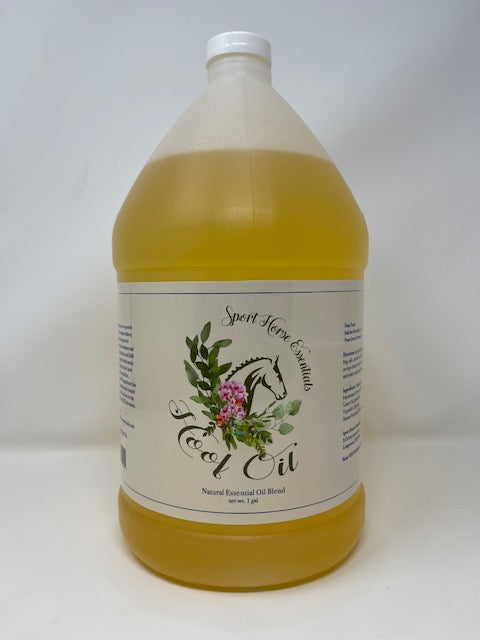
For a Daily Routine
1 Gallon Hoof Oil
$236
$1.84 per oz · 128oz
Where most people land once daily hoof oil has become a habit. Enough to do all four feet properly, every day, and top up the bottle in your grooming tote whenever it runs low.
- Best price per ounce of any size
- Never run out in the middle of a season change
- Refills the small bottle you already own
- Ideal for multi-horse barns and lesson programs
Get the Gallon · $236
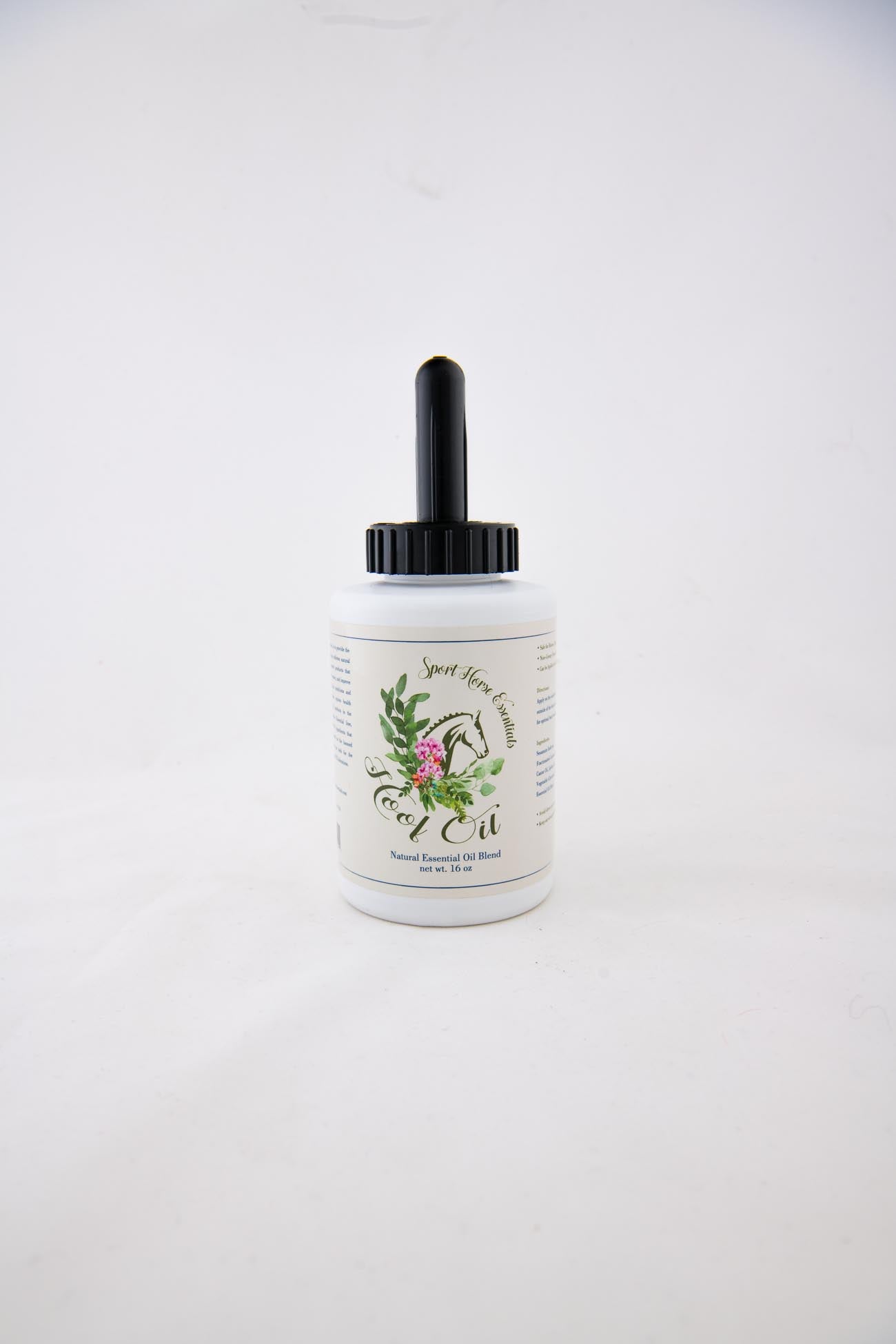
For One Horse
32oz Hoof Oil
$65
$2.03 per oz · 32oz
A comfortable size for one horse on a daily routine, with enough in the bottle that you never have to be careful with it.
- Great size for a single horse
- Easy to keep in the grooming tote
- Same formula, same guarantee
Get the 32oz · $65