The May Skin Check Every
Guardian Should Do This Week
The week after peak shedding is the most overlooked window in the equine care calendar. The skin is freshly exposed, adjusting to tack friction and sweat for the first time in months — and it's talking. Here's how to listen before it has to shout.
There's a specific moment that happens every May. You finish a ride, run your hand down your horse's neck to check for sweat, and something catches. A raised patch. A tiny cluster of bumps just behind the elbow. Skin that feels rough along the saddle line when it shouldn't.
Nine times out of ten, this is where the early signal gets missed.
I've done this check every May for years now. Not because something is usually wrong — but because this specific week, right after peak shedding, is when the skin is most vulnerable and most communicative. The winter coat is gone. Fresh skin is exposed to tack, sweat, sunlight, and friction for the first time in months. And the signals it sends during this adjustment window are small, quiet, and fast to escalate if nobody's paying attention.
This is that check. It takes five minutes. You do it with your hands, not your eyes. And it changes what the rest of your season looks like.
01 Why May Specifically — The Biology of Post-Shed Skin
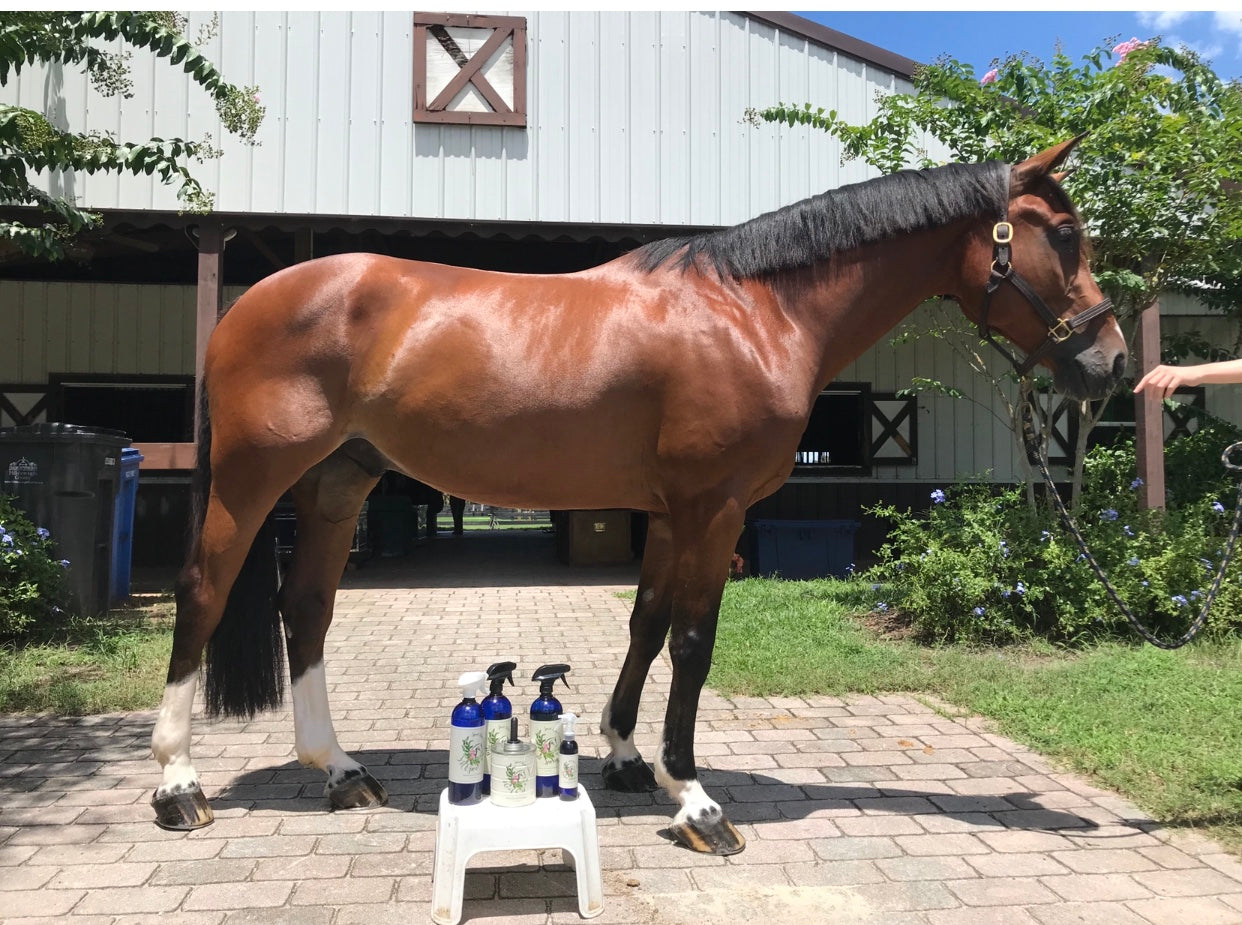
Most Guardians understand shedding as a coat event. The winter hair comes out, the summer coat comes in, and somewhere in the middle there's a lot of hair on everything you own. What's less understood is what's happening at the skin level during that transition — and what it means for the weeks that follow.
The horse's skin is a complex living barrier. The epidermis cycles continuously, with cells shed and replaced on roughly a 17-day cycle under normal conditions — a cycle directly influenced by season, temperature, and hormonal change. During the shedding transition, that cellular turnover accelerates. New skin cells are migrating to the surface faster than usual. The barrier is actively rebuilding itself.
At the same time, the sebaceous glands — the oil-producing glands at the base of each hair follicle — are recalibrating. Sebum, the natural oil these glands produce, is essential for keeping skin soft and pliable and has antimicrobial properties that protect against infection. When the coat changes, so does the distribution and output of sebum. For several weeks the skin's natural oil production is in transition — not yet calibrated to the new coat, not yet fully back in balance.
Into that adjustment we load the horse with: girth friction on skin that hasn't felt a girth in months. Sweat accumulating behind the elbow for the first time since autumn. Increased UV on a skin barrier that was insulated all winter. The first proper work sessions of the season.
Post-shed skin is not normal skin under normal conditions. It is transitional skin under increased load — and it needs to be treated accordingly for the few weeks it takes to fully stabilise.
This doesn't mean the skin is fragile in a clinical sense. A healthy horse with good nutrition and a consistent care routine will move through this transition without incident. What it means is that the early signals — the slight flakiness along the saddle line, the tiny disruption in hair pattern behind the elbow — are more significant during this window than they would be in July. They're the skin's early communication. And May is the month when that communication is clearest.
02 The Five-Minute Hands-On Check
This check is done with your hands, not your eyes. You're looking for things you can feel — changes in skin texture, warmth, raised areas, disrupted hair pattern — as much as things you can see. A brush passes over early skin changes without registering them. Your hands don't.
Do it at the start of grooming, before you've brushed anything away. The skin tells you more before you've disturbed it than after.
Run both hands along the girth line from the sternum back toward the elbow, pressing gently into the skin. You're feeling for raised texture, warmth, any area that makes the horse flinch or shift. This is the highest-priority zone in May because it's the first point of sustained tack contact after months without it.
Smooth even skin, consistent temperature, horse stands calmly through palpation.
Any raised skin, local warmth, disrupted hair pattern, or new sensitivity to pressure.
The skin in the axilla — the fold where the front leg meets the body — is thin, subject to girth friction, and stays damp with sweat longer than anywhere else. In the elbow area you may see broken hair or a patch shorter than the surrounding coat, with pink skin visible through the broken hairs. Press your fingers into this fold and work gently along it.
Hair lies flat, skin smooth, no warmth or swelling in the fold.
Hair that doesn't lie flat, broken hairs shorter than surrounding coat, pink skin visible, small raised bumps.
Run both hands flat along the saddle line from the wither toward the loins. You're looking for dry scurfy skin, rough texture that feels different from the surrounding area, and any raised patches. This area is the first to receive direct UV exposure when the winter coat drops, and the skin there has been insulated all winter.
Smooth consistent texture, horse's back relaxed and soft under your hands.
Flakiness or rough texture along the saddle line. Any raised skin on the topline. Flinching at a specific spot.
Part the mane and examine the crest skin directly. Run your fingers along the mane base, pressing in. This zone sees friction from headcollars and fly mask edges, and May is exactly when the first sweet itch responses begin in susceptible horses.
Skin at mane base smooth and consistent. No dandruff-like flaking at the roots.
Flaking at mane roots, redness along the crest, first signs of self-rubbing on mane or tail.
Light-skinned horses — particularly those with pink skin around the muzzle, eyes, or nose — are at real risk of sunburn in May. Sunburn is seen most often in spring and early summer when longer daylight hours coincide with the shedding of winter hair. Run your hand around the eye area and across the muzzle. Look for redness, slight swelling, or skin that appears more sensitive than usual.
Consistent skin tone, no redness or swelling around eyes or muzzle.
Redness or pinkening of light-coloured skin. Sensitivity around the face that wasn't present a week ago.
The first time you do this methodically, it takes about eight minutes. After a week of consistent daily checks, it takes four to five. The value isn't in the time — it's in knowing your horse's baseline so well that any deviation registers immediately.
03 The Three Early Warning Signals — and What Each One Means
These are the three things you're most likely to find during the May check. Each one has a specific cause and a specific response. Catch them here, at this stage, and you resolve them in days. Miss them and they become the thing you're dealing with for weeks.
Flakiness Along the Saddle Line or Rough Skin Beneath the Coat
This is post-shed skin adjusting. The epidermal turnover cycle that accelerated during shedding has left the skin surface slightly ahead of itself — shedding surface cells faster than the new cells beneath are ready. A horse with disrupted epidermal turnover may present with flaky skin, just like dandruff in a person — and the opposite can be true during rapid seasonal transition.
Standalone flakiness with no other signs is a skin nourishment signal, not an infection signal. The skin is telling you it needs support through the transition.
The skin barrier is in active transition. Support it with a product that absorbs into the tissue — not one that coats over the surface. This is the skin asking for nourishment, not a cover.
Small Bumps or Disrupted Hair Pattern Behind the Elbow or Along the Girth Line
This is the early presentation of girth itch — and it is much easier to resolve at this stage than it will be in two weeks if left alone. Early on, the hair pattern in the axilla becomes disrupted, no longer lying flat against the horse's body. As it progresses, small raised plaques, wheals, and hives develop with scaling, crusting, and hair loss.
The mechanism in May is specific: the girth is contacting skin that has been protected under a winter coat for months. Girth itch often starts where the saddle girth rubs on the thin skin behind the elbow joint — this friction can irritate the skin just like a blister from a shoe that doesn't fit well. That irritated skin becomes the entry point.
Act immediately. Clean the area, dry it thoroughly, and apply targeted antimicrobial support. Check your girth for roughness or worn areas. This signal at this stage is a three-day fix. The same signal ignored becomes a three-week problem.
Sensitivity to Touch in Specific Areas, or Flinching Away from Pressure That Was Fine Last Month
Sensitivity without a visible lesion is often the earliest signal of all. The skin is communicating before the surface shows anything. The inflammatory response — the immune cells in the dermis reacting to an irritant or early pathogen — precedes visible change. Your horse is telling you something before you can see it.
New sensitivity along the saddle line specifically can also indicate the beginning of a photodermatitis response — particularly in horses with less pigmented skin. The newly exposed skin has had no UV adaptation time after a winter under a heavy coat.
Note exactly where the sensitivity is. Does it correspond to a tack contact point? Is it on a light-pigmented area? Map it, watch it for 48 hours, keep that area clean and dry. If sensitivity persists or increases without a visible cause, that's a vet conversation.
04 Absorption vs. Coating — Why It Matters Right Now
I want to talk about something that doesn't get discussed enough, because I think it changes how you see the products you reach for.
When the skin is in this post-shed transition state — actively rebuilding its barrier, recalibrating its sebum production, adjusting to new environmental stressors — the question of what you put on it matters in a way it doesn't at other times of year. Not because the skin is fragile. Because it's responsive. It's in a heightened state of biological activity, and what you apply either supports that process or interferes with it.
"There's a difference between helping the skin do what it's already trying to do — and coating over the surface so you can't see what's happening underneath."
Silicone-based coat sprays and synthetic finishing products do a specific thing: they coat the hair shaft and skin surface. They create the appearance of shine. But they sit on the surface rather than absorbing into the tissue — and in doing so, they can seal over the early signals that post-shed skin is trying to send. A slightly rough patch disappears under a silicone coat. A subtle disruption in the girth area gets lost under synthetic sheen. The skin is still communicating. You've just been given a glossy filter over the conversation.
Natural carrier oils and essential oil formulations work differently. Topical products containing essential oils and fatty acids can help protect and restore the skin barrier — restoring lipid integrity and supporting the skin's own barrier function rather than substituting for it. They absorb. They feed the tissue rather than coating it.
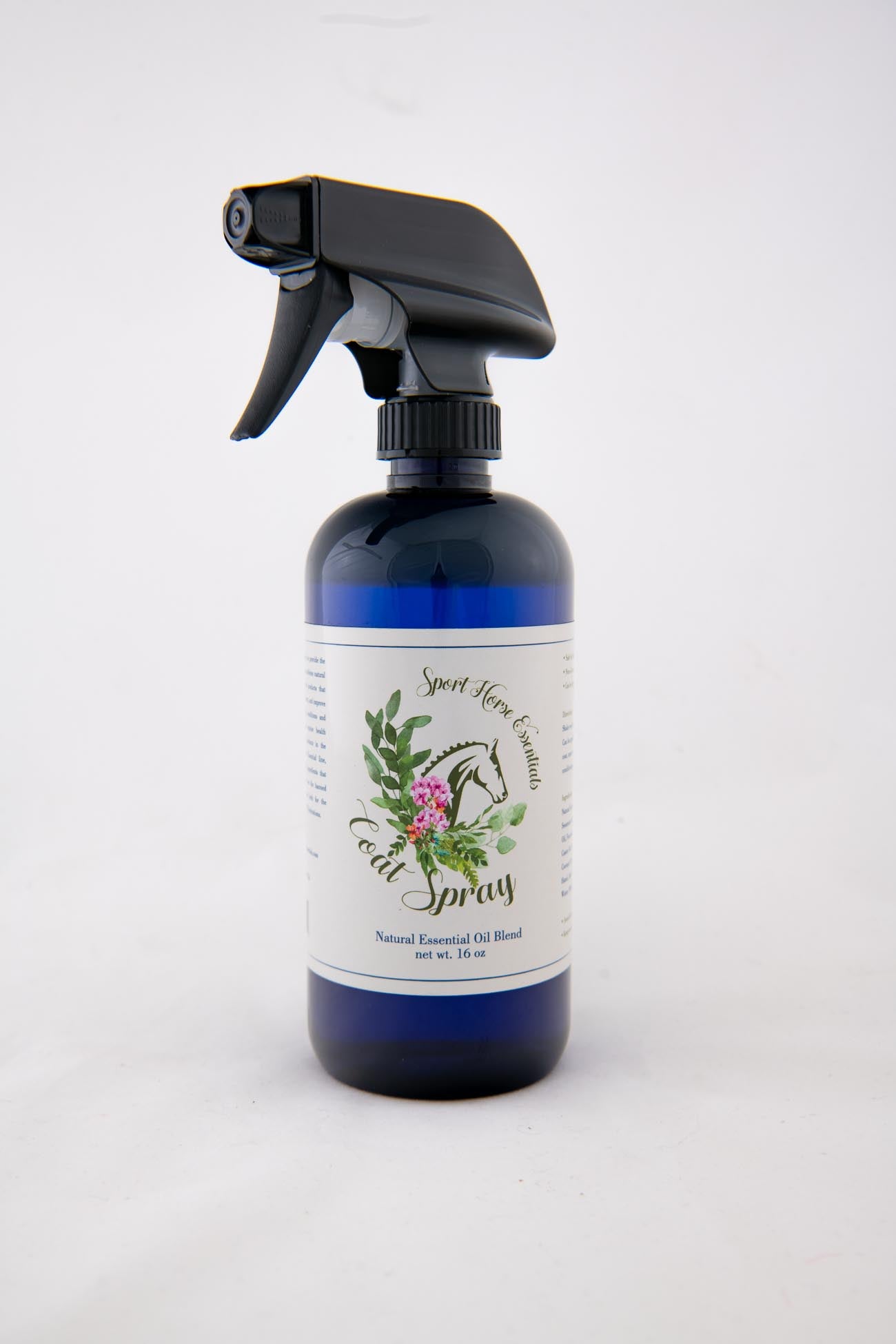
Natural essential oils that absorb into the skin and coat — not a silicone coating. Conditions the skin barrier, reduces static during shedding season, and builds cumulative coat health over consistent use. The post-shed product your horse's skin is asking for.
Shop Coat SprayIf you apply a natural oil product after the May check and something is developing underneath, you'll still see it next session because the product worked with the skin rather than over it. During the five weeks around peak shedding, only use products you trust to let the skin's own signals through.
This is what we mean by the Chemical Exodus — not a rejection of all products, but a considered choice about which products support biological processes and which ones substitute for them. The skin knows what it's doing. Our job is to support that, not override it.
05 When to Act Yourself — and When to Call the Vet
Most of what you find during the May check is manageable at home, caught early. The line between home management and vet involvement is specific, and knowing it means you don't over-react to early signals or under-react to ones that need professional attention.
Handle It Yourself If:
- Mild flakiness along the saddle line with no other signs — clean, dry, and apply a nourishing natural oil product consistently for 5–7 days. Monitor for any change.
- Small bumps or disrupted hair behind the elbow with no open skin — clean the area, apply Fungus & Wound Spray directly to the affected zone twice daily, and keep the girth area dry after every ride. Check and clean your girth. Monitor daily.
- Mild new sensitivity at a tack contact point — note it, adjust girth fit if needed, keep the area clean, and monitor over 48–72 hours. If not improving, escalate.
- Early sun sensitivity on a light-pigmented muzzle or eye area — apply appropriate sun protection before turnout and keep out of peak sun hours where possible.
Call the Vet If:
These signs go beyond what home management can address. Earlier is always better — don't sit on these.
- Any skin lesion growing visibly larger over 48 hours
- Open wounds or areas where skin has broken down — especially in the girth or axilla
- Circular patches of hair loss anywhere on the body — particularly in the saddle or girth zone. Ringworm is contagious to humans and requires confirmed diagnosis — other conditions mimic its appearance
- Skin sensitivity accompanied by fever, loss of appetite, or systemic behavioural changes
- Any skin condition not responding to appropriate home treatment within 10–14 days
- Multiple horses in your barn developing skin issues simultaneously — indicates environmental contamination requiring professional guidance
- Any sudden severe skin reaction in a horse that hasn't shown sensitivity before — can occasionally indicate liver involvement and warrants prompt investigation
Do the Check This Week
Five minutes. Your hands. Before you brush anything away.
The window between peak shedding and established summer coat is short. The signals that appear in it are quiet. And the skin is doing more work in this window than it does at almost any other point in the year — adjusting, rebuilding, recalibrating in response to every new input it's receiving.
The Guardians whose horses sail through spring without skin problems aren't lucky. They're paying attention during the right weeks. They know what normal feels like, so they recognise when something isn't. They catch things at two bumps behind the elbow, not at a spreading infection two weeks later.
That starts with this check. This week.
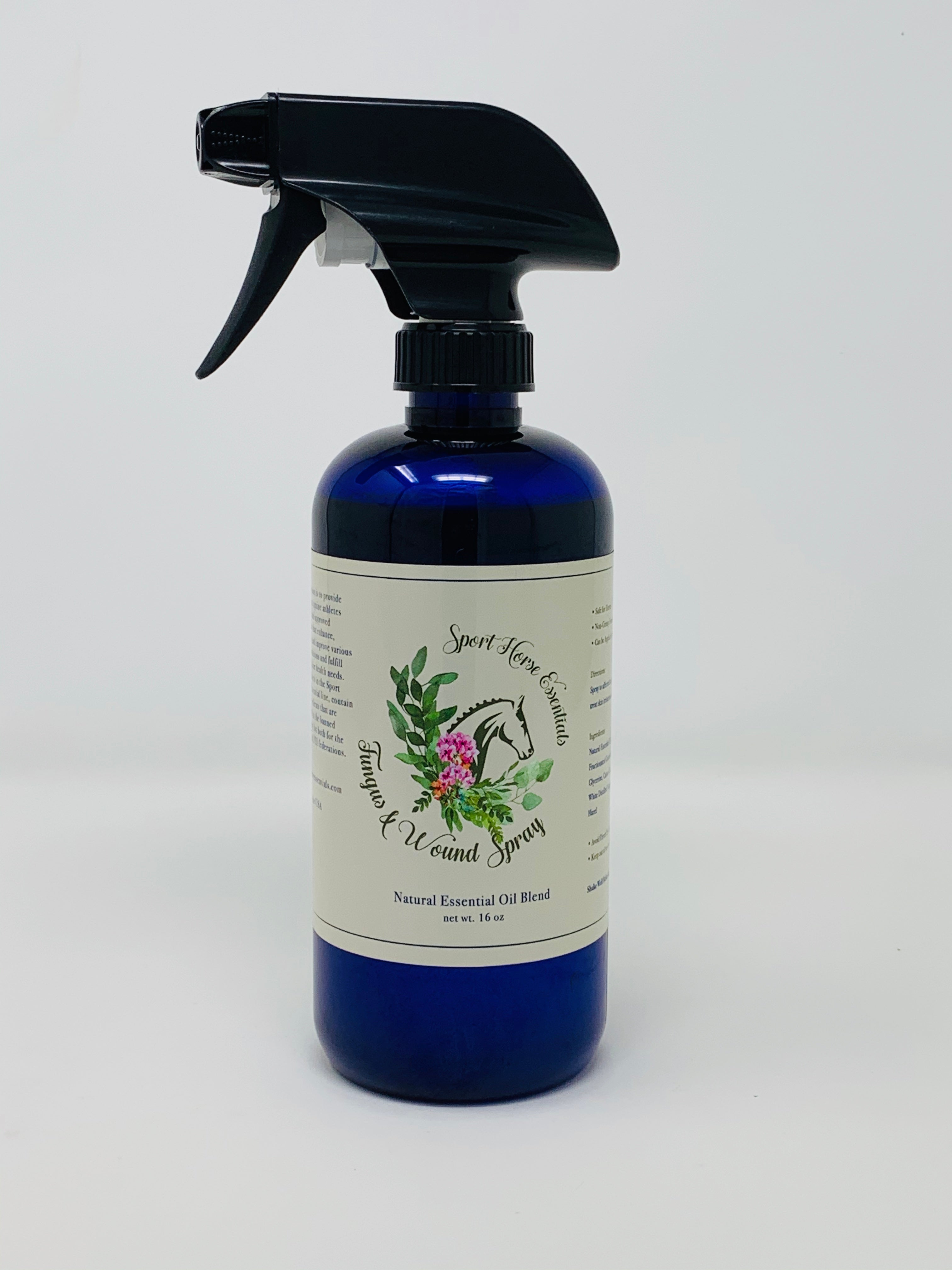
SHE Fungus & Wound Spray
Frankincense and Myrrh essential oil blend with documented antimicrobial properties. Absorbs into the tissue rather than coating over the surface. Reach for it the moment you find something developing — not after it's established. Available in 6oz and 16oz.
